Tech Neck: What It Is and What May Be Contributing
You probably do not even realise you are doing it right now. As you read these words, your head is likely tilted forward, your shoulders are rounded, and your neck is bearing the weight of a bowling ball. We live in a world where our screens demand our constant attention, but that connection comes at a steep physical cost. The persistent ache at the base of your skull, the tightness across your shoulders, and the sudden tension headaches are not just signs of a long day-they are the early warning signals of a structural shift in your spine. At Adjusting to Health, we see the devastating effects of this modern epidemic every single day across our practices in Bonnyrigg, Doonside, and Earlwood. It is time to stop ignoring the pain and start understanding exactly what those hours of scrolling are doing to your body.
What is tech neck and how do you fix it?
Tech neck syndrome is a repetitive stress injury caused by holding your head in a forward and downward position for extended periods, typically while looking at smartphones or computers. This unnatural posture places excessive strain on the cervical spine, leading to muscle tension, nerve irritation, and structural changes over time. Fixing it requires a comprehensive approach that includes ergonomic adjustments, targeted exercises to strengthen weakened muscles, and professional Chiropractic care to restore proper spinal alignment and joint function.
The Hidden Cost of Our Digital Lives
The human head is heavy, weighing roughly five kilograms when perfectly balanced over your shoulders. However, the physics of your spine change dramatically the moment you tilt your head forward to look at a screen. For every few centimetres your head moves forward, the load on your neck muscles and cervical spine doubles. By the time you are looking down at your phone at a sixty-degree angle, your neck is supporting nearly twenty-seven kilograms of pressure. This constant, unnatural strain is the primary driver behind tech neck syndrome, a condition that is rapidly becoming one of the most common structural issues we treat.
When you subject your spine to this level of stress day after day, the body attempts to adapt. Muscles at the back of the neck become chronically overworked and tight as they struggle to hold your head up, while the muscles in the front of your neck become weak and shortened. This muscular imbalance is just the beginning. Over time, the sustained pressure can lead to the premature degeneration of the spinal discs, causing them to thin and lose their shock-absorbing capabilities. What starts as occasional screen time neck pain can quickly evolve into a chronic condition that impacts every aspect of your daily life.
How Forward Head Posture Changes Your Spine
The spine is designed with a natural, healthy curve in the neck, known as the cervical lordosis. This curve acts like a spring, absorbing the impact of your movements and distributing the weight of your head evenly across the spinal joints. Forward head posture, the hallmark of tech neck syndrome, actively works to destroy this vital curve. As you spend hours hunched over your devices, the cervical spine begins to straighten or, in severe cases, even reverse its natural curve.
This structural shift is not merely a cosmetic issue; it fundamentally alters how your nervous system functions. The spinal cord, which houses the vital communication pathways between your brain and the rest of your body, passes directly through the cervical spine. When the spine loses its natural curve, it can place abnormal tension on the spinal cord and the exiting nerve roots. This neurological interference can manifest in a variety of ways, from localized pain and stiffness to radiating symptoms that travel down your arms. As a dedicated tech neck Chiropractor, we understand that correcting this posture is not just about standing up straighter-it is about restoring the fundamental integrity of your spine and nervous system.
The Ripple Effect: Beyond Just Neck Pain
While the neck bears the brunt of the initial damage, the effects of tech neck syndrome do not stop there. The human body is an interconnected system, and a structural failure in one area inevitably leads to compensatory changes in another. As your head moves forward, your shoulders naturally round forward to counterbalance the weight. This collapses your chest cavity, restricting your diaphragm and reducing your lung capacity. You may find yourself taking shallower breaths, which can decrease oxygen flow to your brain and leave you feeling fatigued and unfocused.
Furthermore, the tension in your neck and upper back can trigger severe cervicogenic headaches. These headaches often start at the base of the skull and radiate over the top of the head, mimicking the symptoms of a tension headache or even a migraine. The altered posture also places additional stress on the mid and lower back, as the spine struggles to maintain its center of gravity. What began as a simple habit of looking down at your phone can cascade into a complex web of pain and dysfunction that affects your entire body.
Why "Just Sitting Up Straight" or "Good Posture" Isn't Enough
When people first notice the symptoms of tech neck, their immediate reaction is often to try and force themselves to sit up straight. While being mindful of your posture is important, simply pulling your shoulders back is rarely enough to undo years of structural adaptation. The muscles, ligaments, and joints have already remodelled themselves to support the forward head posture. Forcing a new position without addressing the underlying structural restrictions often leads to more pain and frustration.
True correction requires a systematic approach that addresses both the muscular imbalances and the joint dysfunctions. This is where professional intervention becomes crucial. You cannot stretch your way out of a structural problem, and you cannot strengthen a muscle that is neurologically inhibited due to spinal misalignment. Effective treatment must involve restoring proper motion to the restricted joints, retraining the nervous system, and gradually rebuilding the natural curve of the cervical spine.
Our Tailored Approach to Tech Neck
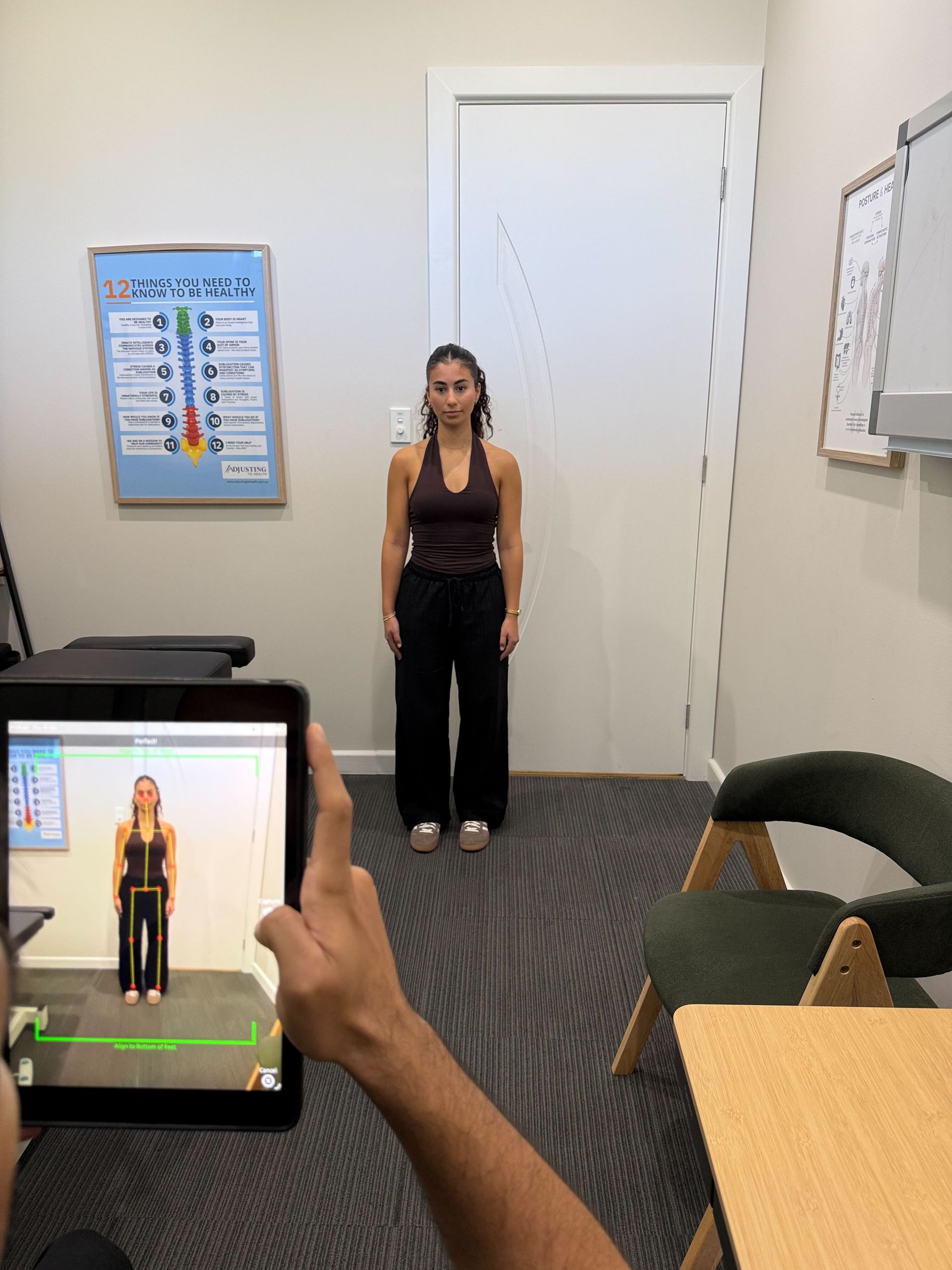
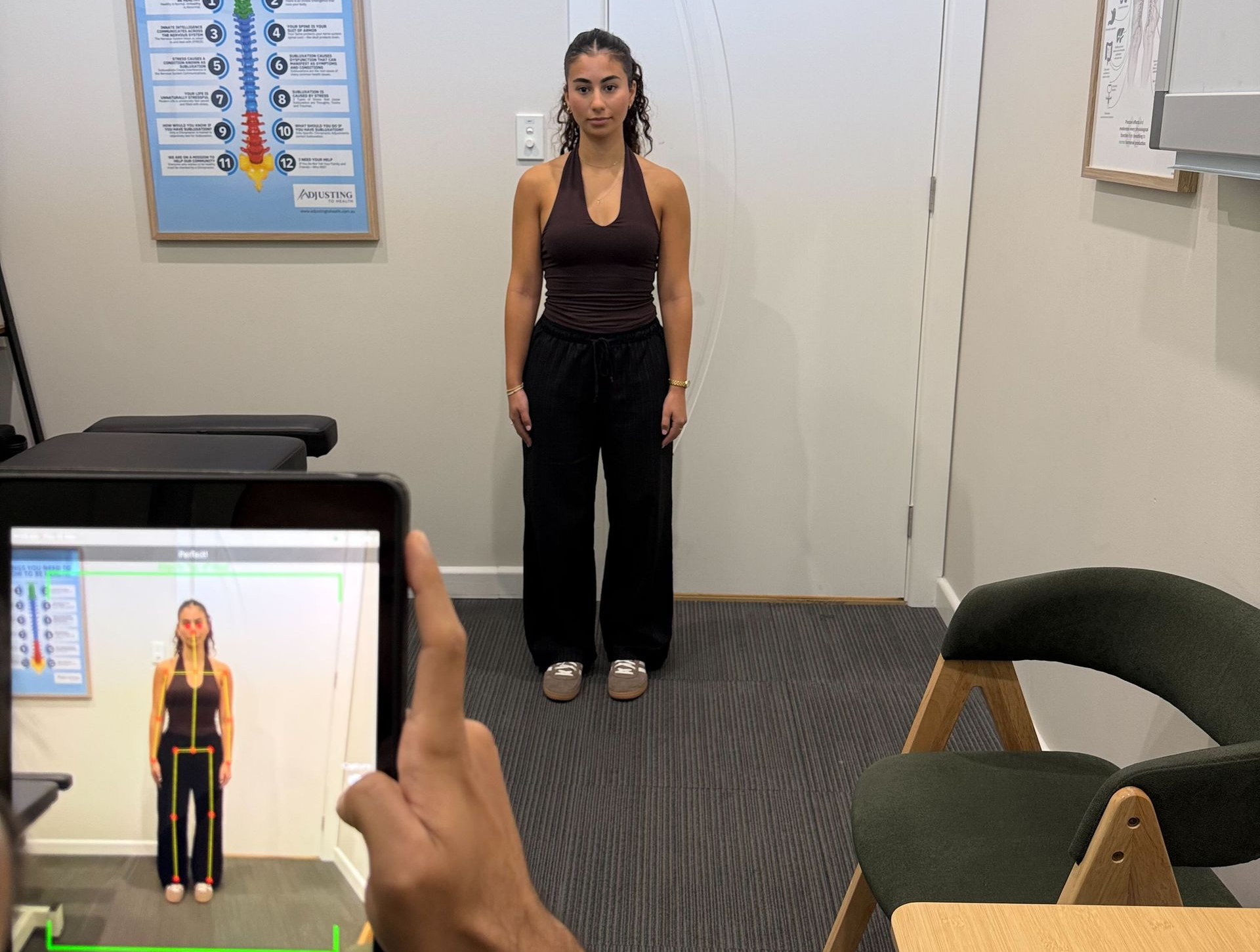
At Adjusting to Health, we refuse to guess when it comes to your spine. Our proprietary Health Blueprint™ is a comprehensive 10-step process designed to uncover the exact cause of your tech neck syndrome and provide a clear path to recovery. We begin with a Comprehensive Health History and Goal Setting, ensuring we understand exactly how this condition is impacting your life. Our Spinal & Neurological Exam, combined with Digital Posture Screening, allows us to objectively measure the extent of your forward head posture and identify the specific areas of neurological interference.
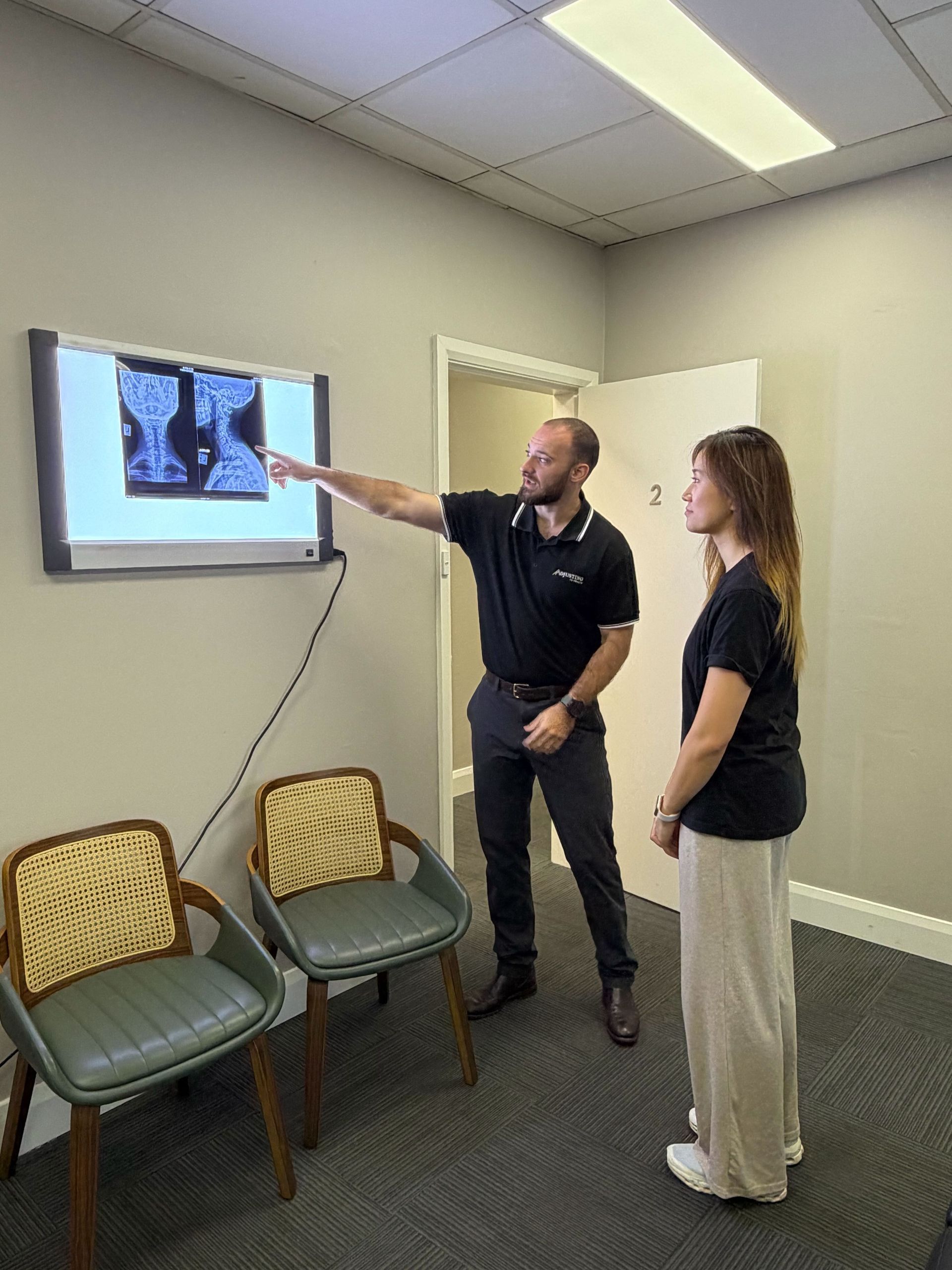
Through precise Subluxation Palpation and, when necessary, an Imaging Referral, we map out the exact structural changes in your cervical spine. We then present our findings in a detailed Two-Part Report of Findings, providing you with a clear Diagnosis and a customized care plan. Our approach moves through three distinct phases: Corrective Care to address the immediate structural issues, Stabilisation to retrain the muscles and ligaments, and Wellness Care to maintain your progress. We do not offer quick fixes; we offer a scientifically grounded, results-driven solution to reclaim your health and vitality.
References
- Hansraj, K.K. (2014) 'Assessment of stresses in the cervical spine caused by posture and position of the head', Surgical Technology International, 25, pp. 277-279. Available at: https://pubmed.ncbi.nlm.nih.gov/25393825/
- Neupane, S., Ali, U. and Mathew, A. (2017) 'Text neck syndrome - systematic review', Imperial Journal of Interdisciplinary Research, 3(7), pp. 141-148. Available at: https://www.semanticscholar.org/paper/Text-Neck-Syndrome-Systematic-Review-Neupane-Ali/d4d58fd3e1b10bb6276b926917dc5d2c6d633cab
- World Health Organization (2022) Guidelines on physical activity and sedentary behaviour. Available at:
https://www.who.int/publications/i/item/9789240015128
Take the First Step Toward Better Posture
Do not wait until poor posture translates into chronic pain or diminished energy. Take proactive control of your spinal health today. Experience the thoroughness of our Health Blueprint™ assessment and discover exactly what your posture is telling you about your overall well-being.
Contact Adjusting to Health to schedule your comprehensive evaluation:
• Bonnyrigg: (02) 9822 0008
• Doonside: (02) 9138 9393
• Earlwood: (02) 8395 5555
• Website: adjustingtohealth.com.au
FAQs
Frequently Asked Questions
Can tech neck be permanently reversed?
Yes, in many cases, the structural changes associated with tech neck can be significantly improved or reversed, especially if caught early.
However, it requires a commitment to a comprehensive corrective care plan, including specific Chiropractic adjustments, targeted exercises, and consistent ergonomic changes.
How long does it take to correct forward head posture?
The timeline for correction varies depending on the severity of the condition and how long the posture has been present.
While many patients experience relief from pain within the first few weeks of care, true structural correction and stabilization typically take several months of dedicated treatment and lifestyle modifications.
Are headaches a normal symptom of tech neck?
Yes, cervicogenic headaches are a very common symptom of tech neck syndrome.
The chronic tension in the neck muscles and the abnormal stress on the upper cervical spine can irritate the nerves that travel into the head, leading to frequent and sometimes severe headaches.
Ready to Resolve Your Tech Neck?
Do not let screen time dictate the health of your spine. If you are experiencing the telltale signs of tech neck syndrome, it is time to take action before the damage becomes permanent. Experience the difference of our Health Blueprint™ assessment and discover exactly what is happening beneath the surface. Contact Adjusting to Health today to schedule your comprehensive evaluation.
Call your local practice directly:
• Bonnyrigg: (02) 9822 0008
• Doonside: (02) 9138 9393
• Earlwood: (02) 8395 5555
Or simply click below to book an appointment online.
More Articles