Still Living With Pain? Why "Normal" Back Pain Is Not Normal
Not So "Normal" Back Pain
There is a conversation happening in homes, offices, and waiting rooms across Sydney every single day.
It sounds like this:
"My back's been playing up again."
"Yeah, mine too. It's just part of getting older, isn't it?"
And just like that, the conversation moves on. The pain stays. Nothing changes.
At Adjusting to Health, we hear this from new patients in Bonnyrigg, Doonside, and Earlwood more than almost anything else. People who have lived with back pain for so long that they have stopped questioning it. They have accepted it as background noise - an unavoidable part of being an adult, sitting at a desk, raising kids, or simply ageing.
Here is the truth that most people have never been told: chronic back pain is not normal. It is common, yes. But common and normal are not the same thing. Pain is your body's alarm system. When it keeps firing, it is telling you that something is structurally wrong, and ignoring it does not make it go away. It makes it worse.
This article is for anyone who has quietly accepted pain as part of their life.
Is it normal to have back pain every day?
No. While back pain is extremely common - affecting up to 80% of Australians at some point, daily or recurring pain is not a normal state. It indicates an underlying structural, neurological, or biomechanical issue that has not been identified or addressed.
Chronic back pain is a signal that something in the spine or nervous system requires investigation, not a condition to simply manage with painkillers or accept as inevitable.
How Pain Becomes "Normal"
The normalisation of pain does not happen overnight. It is a slow, gradual process that unfolds over months and years. It usually starts with a minor episode, you lift something awkwardly, sleep in a bad position, or spend a long weekend in the car. Your back hurts for a few days, then it settles. You move on.
A few months later, it happens again. This time it lasts a bit longer. You take some Nurofen, maybe get a massage, and it eases off. You tell yourself it is just a niggle.
Over time, the episodes become more frequent. The baseline discomfort between flare-ups never quite returns to zero. You start avoiding certain activities - you stop going to the gym, you decline the weekend bushwalk, you let your kids climb on someone else at the playground. You adjust your life around the pain without even realising you are doing it.
And then one day, someone asks how your back is, and you say: "Oh, it's just my back. It's always like this."
That is the moment pain became normal. Not because it is, but because you ran out of options and stopped looking for answers.
Why Accepting Pain Is Dangerous
The underlying cause progresses
Pain does not exist in a vacuum. If your spine is misaligned, if a disc is bulging, if a nerve is being compressed, those issues do not pause because you have decided to live with the symptoms. They continue to degenerate. The longer a structural problem goes unaddressed, the more complex and difficult it becomes to correct. What could have been resolved in weeks of care may eventually require months, or in some cases, avoidable surgical intervention.
Your quality of life erodes quietly
Chronic pain does not just affect your back. It affects your sleep, your mood, your energy, your patience, your relationships, and your ability to be present.
Research published in The Lancet identified lower back pain as the single leading cause of disability worldwide, not because the pain itself is catastrophic, but because of the cumulative impact it has on every aspect of a person's life when left unresolved.
Your nervous system adapts to dysfunction
Your brain is remarkably adaptable, but that adaptability works both ways. When pain signals fire repeatedly over a long period, your nervous system can become sensitised, meaning it starts amplifying pain signals even when the original stimulus has not changed. This is called central sensitisation, and it is one of the reasons chronic pain becomes harder to treat the longer it persists. Your body literally rewires itself to expect pain.
The Question Nobody Asks
If you have been living with back pain for months or years, there is a question that probably has not been asked, either by you or by the practitioners you have seen:
"What is actually causing this?"
It sounds obvious. But the reality is that most people with chronic back pain have never had a thorough structural investigation of their spine. They have had their symptoms assessed, where does it hurt, how bad is it, here is some medication, but the underlying cause has never been identified.
A GP appointment for back pain typically lasts 5 to 15 minutes. In that time, the doctor may ask you to confirm where the pain is, ask about other medications, and prescribe anti-inflammatories. What they generally cannot do in that window is assess your spinal alignment segment by segment, evaluate your neurological function in detail, screen your posture digitally, or determine whether vertebral misalignments are creating nerve interference.
That is not a criticism of GPs, it is simply outside the scope of a standard consultation. But it means that millions of Australians are being managed for symptoms without ever having the cause investigated. And when the cause is never found, the pain never truly resolves
What a Proper Investigation Looks Like
At Adjusting to Health, we built our Health Blueprint assessment specifically to answer the question that nobody else is asking. It is a structured, 10-step process that investigates your spine and nervous system in the kind of detail that most patients have never experienced.
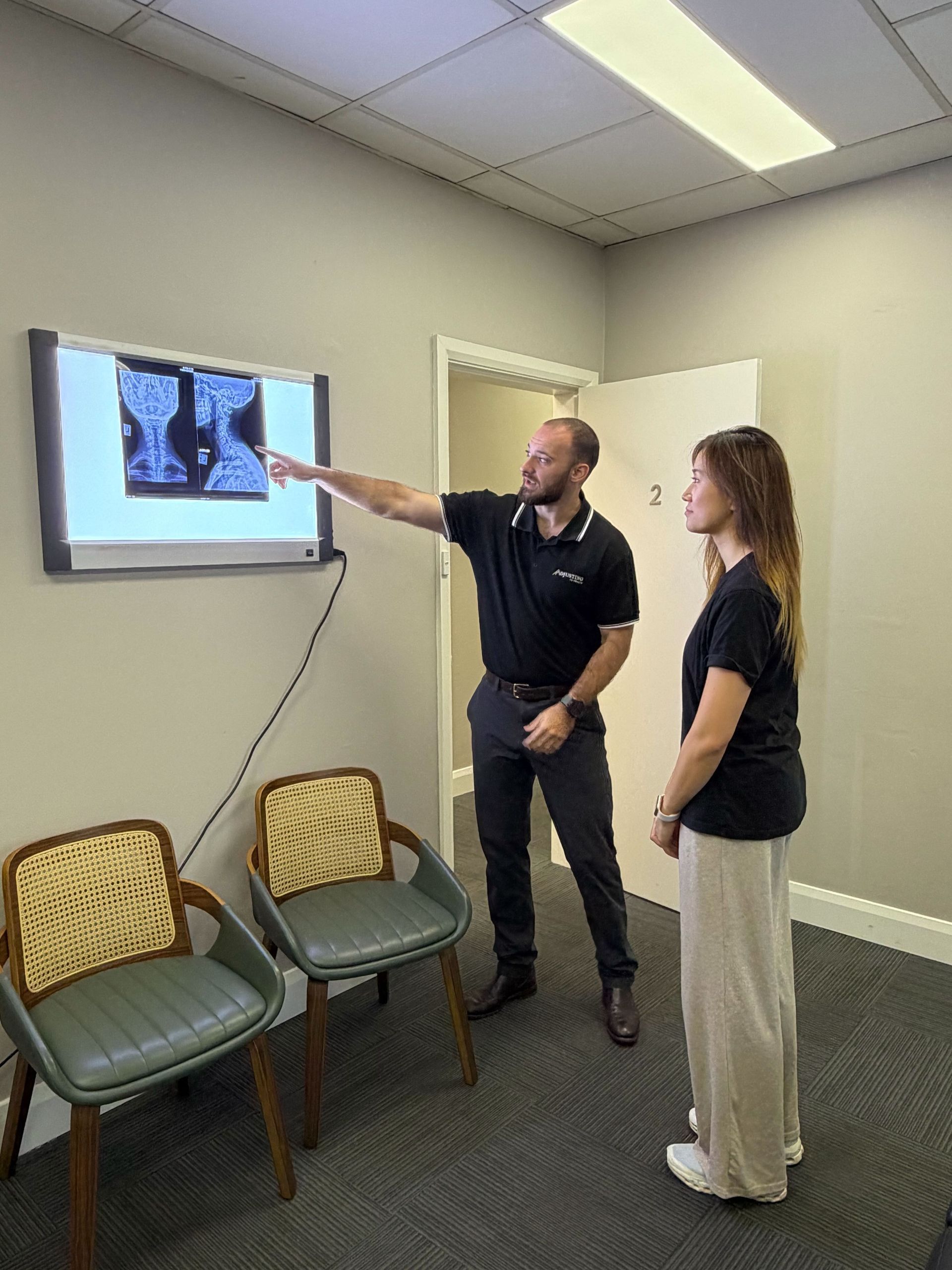
It begins with a comprehensive health history, not a five-minute chat, but a genuine conversation about your full health story, your lifestyle, your goals, and what you have tried before. From there, we conduct a spinal and neurological examination, digital posture screening, and subluxation palpation to identify exactly where dysfunction exists. We refer every patient for imaging so that we can see what is happening beneath the surface, not just feel for it.
All of this happens before any treatment begins. Because we do not guess, we test.
The result is a clear diagnosis and a personalised care plan built around three phases: Corrective Care to address the root cause, Stabilisation to ensure the correction holds, and Wellness Care to maintain your results long term. It is a structured pathway from pain to function to vitality, not an endless cycle of symptom management.
You Were Not Built to Live in Pain
The human body is extraordinary. It can heal broken bones, fight infections, regulate temperature, and adapt to incredible physical demands. But it cannot self-correct a spinal misalignment. It cannot decompress a nerve that is being pinched by a shifted vertebra. It cannot reverse years of postural dysfunction without intervention.
What it can do, with the right support, is recover. We see it every week in our clinics across Bonnyrigg, Doonside, and Earlwood. Patients who walked in believing their pain was permanent walk out of their corrective care phase moving better, sleeping better, and living better than they have in years.
Not because we performed a miracle. But because we found the cause, built a plan, and followed through.
Frequently Asked Questions About Back Pain
How do I know if my back pain is serious enough to see a Chiropractor?
If your back pain has lasted more than a few weeks, keeps returning, or is affecting your daily activities, sleep, or mood, it is worth having it properly assessed. You do not need to be in severe pain to benefit from a thorough spinal investigation. Many of our patients wish they had come in sooner.
Can back pain go away on its own?
Acute back pain from a minor strain can resolve with rest and time. However, if pain is recurring or has been present for months, it is unlikely to resolve without addressing the underlying structural cause. The longer it persists, the more the body compensates, and the more complex the issue becomes.
Do I need a referral to see a chiropractor in Australia?
Do I need a referral to see a chiropractor in Australia? No. You can book directly with a chiropractor without a GP referral. Chiropractic is covered under most private health insurance plans with extras cover.
What if I have already tried everything?
Many of our patients say exactly this when they first walk in. What they usually mean is that they have tried several approaches to managing their symptoms, but they have never had the root cause properly investigated. Our Health Blueprint assessment is designed to find what others have missed.
This Is Your Starting Line
If you have been living with back pain and telling yourself it is just how things are, consider this your invitation to challenge that belief. Pain is not a life sentence. It is a signal. And signals are meant to be investigated, not silenced.
At Adjusting to Health, we are here to help you find out what is actually going on, and build a clear, structured plan to fix it.
Book your Health Blueprint assessment today.
•Bonnyrigg: (02) 9823 8868
•Doonside: (02) 9138 9393
•Earlwood: (02) 9560 0184
Or simply visit our online booking page for a more seamless experience.
References
•Australian Institute of Health and Welfare (2024) Back problems. Available at:
https://www.aihw.gov.au/reports/chronic-musculoskeletal-conditions/back-problems
(Accessed: March, 2026).
•Woolf, C.J. (2011) 'Central sensitization: Implications for the diagnosis and treatment of pain', Pain, 152(3 Suppl), pp. S2–S15. Available at: https://pubmed.ncbi.nlm.nih.gov/20961685/ (Accessed: March, 2026 ).
More Articles