What Causes Lower Back Pain? Chiropractor’s Perspective
If you are reading this, chances are you have been struggling with an aching, stiff, or sharp sensation in your lower back that simply refuses to go away. You have likely visited your local doctor, explained your symptoms, and walked out with a prescription for painkillers, anti-inflammatories, or perhaps just the advice to rest and give it time. While this conventional approach might offer some temporary relief, it rarely addresses the root cause of the problem. At Adjusting to Health, we see countless patients across our Bonnyrigg, Doonside, and Earlwood practices who are incredibly frustrated by this endless cycle of temporary fixes. They want real answers, not just a band-aid solution that wears off in a few hours. The reality is that a comprehensive lower back pain diagnosis requires looking far beyond the surface symptoms to understand exactly how your spine, muscles, and nervous system are functioning together as a whole.
When diagnosing lower back pain:
Doctors often miss the structural and functional misalignments of the spine, focusing instead on symptom management through medication. A standard GP back pain consultation typically lacks a detailed biomechanical analysis or a comprehensive neurological exam back pain assessment. Without evaluating the precise movement and alignment of the vertebrae, the underlying cause of the pain remains unidentified and untreated.
Why Standard Medical Approaches Often Fall Short
When you present to a medical practice with spinal discomfort, the conventional medical model is heavily geared towards pathology. The primary goal is to rule out severe, life-threatening conditions such as fractures, infections, tumours, or severe systemic diseases. Once those red flags are cleared-which they are in the vast majority of cases-the diagnosis often defaults to a vague term like "non-specific lower back pain." This label essentially means that the exact cause is unknown to the practitioner, which is precisely why the prescribed treatment is usually generic and focused solely on symptom reduction.
However, pain is not the actual problem; pain is your body's sophisticated alarm system. It is a vital signal that something is structurally or functionally amiss. Masking that alarm with medication does not put out the fire; it merely silences the warning siren while the underlying damage continues to worsen. To achieve true, lasting healing, you need a precise lower back pain diagnosis. This is where a more detailed, biomechanical investigation becomes absolutely crucial. Your spine is an incredibly complex structure composed of bones, joints, discs, ligaments, and nerves. If even one segment is not moving correctly, it can create a massive cascade of tension, inflammation, and compensatory movement patterns throughout your entire body. A standard GP back pain visit, which often lasts only ten to fifteen minutes, simply does not allow the time or the specialized focus required to assess these intricate biomechanics thoroughly.
The Missing Piece: A Comprehensive Spinal Assessment
Understanding the mechanics of your spine is the very first step toward lasting relief and true correction. This is exactly why a thorough spinal assessment is non-negotiable when dealing with chronic or recurring issues. Instead of just asking where it hurts and prescribing a pill, we need to look at how you move, how your posture holds up under the constant stress of gravity, and where the specific restrictions and imbalances lie. Misalignments, or what we refer to as subluxations, can place undue stress on the surrounding tissues, discs, and nerves, leading to chronic discomfort and accelerated wear and tear.
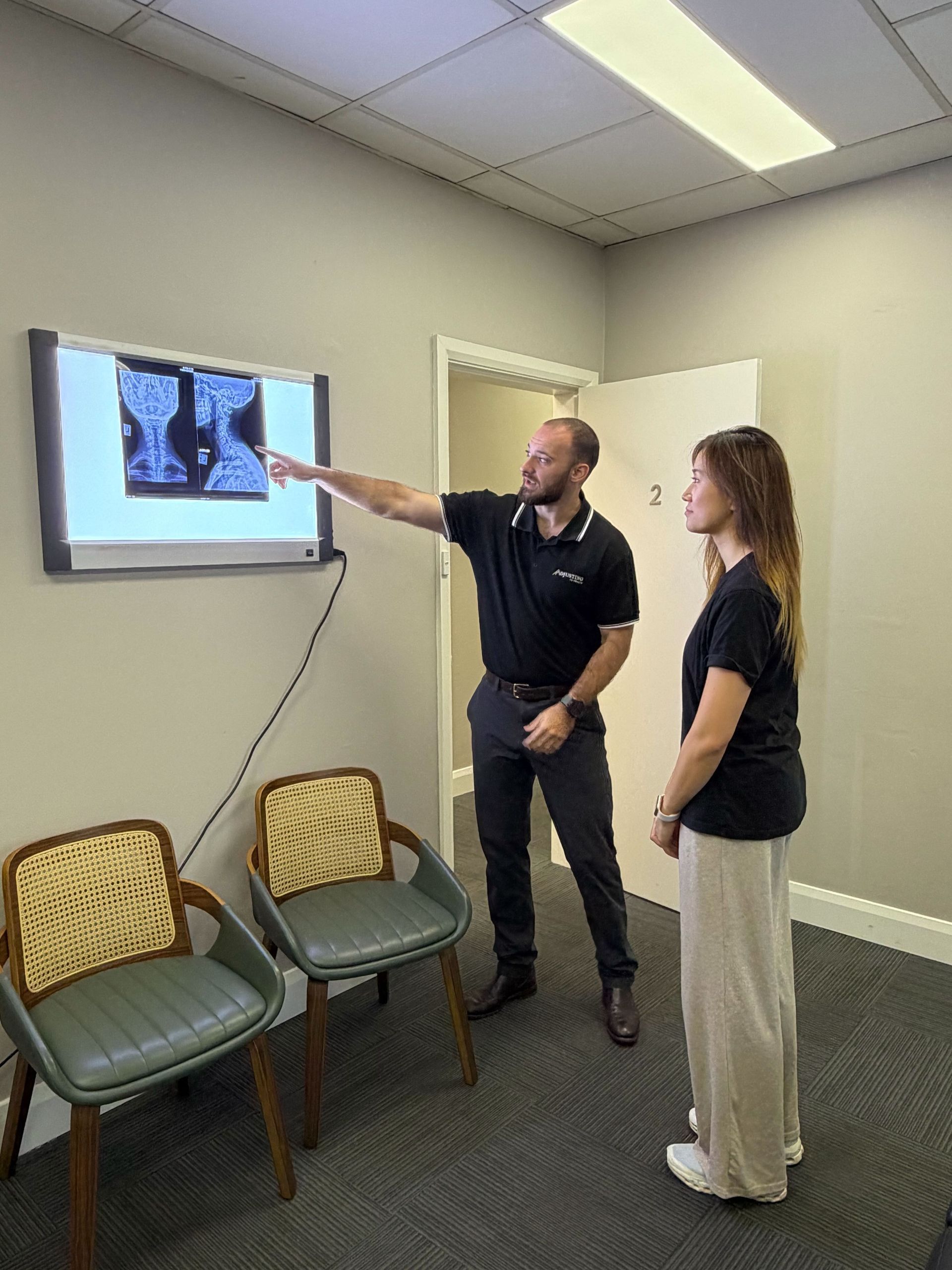
At Adjusting to Health, our entire approach is built on the steadfast philosophy that "We Don't Guess, We Test." We refuse to leave your health to chance. Our unique Health Blueprint™ is a meticulous 10-step process designed specifically to uncover the exact cause of your issue. It begins with a Comprehensive Health History and Goal Setting session, ensuring we understand not just the practiceal nature of your pain, but how it is impacting your daily life, your work, and your family. We then move into a highly detailed Spinal & Neurological Exam, followed by Digital Posture Screening and precise Subluxation Palpation. If our findings indicate the need for further investigation, we provide an Imaging Referral to see exactly what is happening beneath the surface of your skin. This exhaustive process ensures that absolutely nothing is overlooked and that your care is based on objective data, not assumptions.
The Critical Role of the Nervous System in Your Recovery
Your spine does not just serve as a structural pillar to hold you upright; its primary function is to house and protect your delicate central nervous system, which is the master controller of every single function in your body. When spinal joints lose their normal motion or position, they can irritate, compress, or stretch the delicate nerves exiting the spine. This neurological interference can dramatically amplify pain signals, cause muscle spasms, and significantly delay your body's natural healing processes. Therefore, a proper neurological exam back pain evaluation is a critical, indispensable component of your overall diagnosis.
By meticulously testing your reflexes, muscle strength, and sensory perception, we can determine exactly if and where nerve irritation is contributing to your condition. This level of granular detail is almost always what is missing from a standard medical consultation. Once we have gathered all this vital data through our testing protocols, we do not just keep it to ourselves. We present it to you in a comprehensive Two-Part Report of Findings. During this time, we explain your Diagnosis in clear, understandable terms and outline a tailored Care Plan. This plan is designed to move you logically and effectively through Corrective Care to address the root cause, into Stabilisation to strengthen the area, and ultimately towards Wellness Care to maintain your results long-term.
The Danger of Ignoring the Warning Signs
Many people make the mistake of ignoring their lower back pain, hoping it will simply vanish on its own. They might alter how they walk, stop participating in their favourite sports, or rely on over-the-counter anti-inflammatories just to get through the workday. This approach is incredibly risky. When you ignore the structural imbalances causing your pain, your body attempts to adapt. It lays down scar tissue, alters your gait, and places excessive strain on other joints, such as your hips and knees, to compensate for the lack of mobility in your lower back.
Over time, this compensatory mechanism leads to premature spinal degeneration, commonly known as osteoarthritis. What started as a simple, correctable misalignment can evolve into a chronic, debilitating condition that is much harder to resolve. This is why early intervention and a precise lower back pain diagnosis are so vital. By identifying and correcting the dysfunction early, you not only eliminate the pain but also prevent future complications and preserve the longevity of your spine. We see patients from all walks of life-from office workers in Doonside to tradespeople in Bonnyrigg-who wish they had sought a proper assessment years earlier before their condition deteriorated.
Taking Control of Your Spinal Health Today
You absolutely do not have to accept chronic discomfort as a "normal" part of aging or a permanent, unavoidable consequence of your lifestyle or occupation. By seeking a more profound, objective understanding of your condition, you empower yourself to make informed, proactive decisions about your health and your future. A precise lower back pain diagnosis is the solid foundation upon which an effective, long-term solution is built. Without it, you are simply guessing.
We firmly believe in educating our patients so they can actively participate in their own recovery journey. When you truly understand the mechanics of your body, the specific areas that need correction, and the rationale behind your treatment, the path to wellness becomes clear, logical, and highly achievable. It is time to move beyond the guesswork, beyond the temporary fixes, and discover what is truly going on with your spine. Your body has an incredible capacity to heal itself when the interference is removed and proper function is restored.
References
• Australian Institute of Health and Welfare (2023) Back problems. Available at: https://www.aihw.gov.au/reports/chronic-musculoskeletal-conditions/back-problems
• World Health Organization (2020) Low back pain.
Available at:
https://www.who.int/news-room/fact-sheets/detail/low-back-pain
• Rubin, D.I. (2007) 'Epidemiology and Risk Factors for Spine Pain',
Neurologic Practices, 25(2), pp. 353-371.
• Haldeman, S., Dagenais, S. (2008) 'A supermarket approach to the evidence-informed management of chronic low back pain', The Spine Journal, 8(1), pp. 1-7.
FAQs
Frequently Asked Questions
Why does my lower back pain keep returning after taking medication?
Medication typically masks the symptoms by chemically blocking pain signals from reaching your brain, but it does not correct the underlying structural or biomechanical issues causing the pain in the first place. Once the medication wears off, the pain inevitably returns because the root cause-such as a spinal misalignment or joint dysfunction-remains completely unresolved.
What is involved in a comprehensive spinal assessment?
A comprehensive spinal assessment involves a detailed evaluation of your posture, spinal mobility, and overall joint function. It includes precise physical palpation to identify specific areas of restricted movement and may involve advanced digital posture screening or specific imaging referrals to get a complete, objective picture of your spinal health and biomechanics.
How is a neurological exam related to back pain?
The nerves that travel down your legs and throughout your lower body originate in your lower back. A neurological exam tests your reflexes, muscle strength, and sensory perception to determine if these specific nerves are being compressed, stretched, or irritated by spinal misalignments. This nerve interference is a very common, yet frequently overlooked, cause of lower back pain.
Can I prevent lower back pain from coming back?
Yes, prevention is a key focus of our approach. Once we guide you through Corrective Care and Stabilisation, we focus on Wellness Care. This involves maintaining proper spinal alignment, improving core strength, and addressing lifestyle factors to ensure your spine remains healthy and resilient against future injuries.
Ready to Find the Root Cause of Your Pain?
Stop settling for temporary relief and discover the true cause of your discomfort. Experience the Adjusting to Health difference with our comprehensive Health Blueprint™ assessment. We don't guess, we test. Book your consultation today and take the first definitive step towards lasting wellness and a pain-free life.
Contact your nearest practice:
• Bonnyrigg: (02) 9822 0008
• Doonside: (02) 9138 9393
• Earlwood: (02) 8395 5555